On AI, Art and Wooden Barrels
It was amusing to see Bernie Sanders use the chatbot Claude in his campaign for stronger government oversight and regulation of AI. And when, a little later, I read a thoughtful opinion piece in Aftenposten by the Norwegian author Jan Kjærstad about using AI as part of the creative process, I felt relieved. Finally, someone challenging the frenzied and at times self-righteous opposition to AI with wisdom and common sense. So I am trying to broaden the perspective by taking a closer look at the role of artists in the face of new technology.
AI is already driving a historic concentration of capital and power, an increasingly dangerous military arms race, and an explosive expansion of energy-hungry data centres. Bill Gates and several leading AI developers have warned that misuse of the technology could have catastrophic consequences, potentially leaving millions dead.
We are in the middle of a gigantic experiment with our own future, and the challenge is to bring a development with potentially catastrophic consequences under control. Are we going to leave control in the hands of technology giants and military powers, or take on the enormous and difficult struggle to ensure that AI serves humanity, including artists?
To me, it is obvious that artists also have a responsibility here: to use the tools available to them, including AI if it can help elevate their art. After all, how can art reflect and challenge our own time if we reject the very technology that is likely to shape it more than any other?
A hundred years ago, there were coopers all over the world. They made wooden barrels, a craft that required years of experience. But time did not stand still, and wooden barrels were replaced by plastic and steel. Today, few people still master the traditional craft.
The coopers did not disappear because they became less skilled at making barrels. They disappeared because the world changed.
Now we are facing a technological upheaval that may prove even greater than the agricultural revolution 12,000 years ago.
Artificial intelligence is not just another new tool. It can transform the way we work, think, learn, communicate and create.
And in the midst of this revolution, we keep hearing that AI has no place in art.
What a strange position to take! How can we exclude something that, perhaps more than anything else, is going to shape our time? It would be like painters trying to ban the camera when photography arrived.
But that certainly does not mean we should hand over the future of art to machines.
Writers who write without the help of AI, and painters who paint without generative tools, are part of our living cultural heritage. Of course, they must be protected when new technologies threaten their livelihoods. But we must also do the opposite of what many AI opponents want: we must open the doors to the use of AI, including in art. At the same time, we must fight to ensure that copyright is respected and that artists are paid when their work is used to develop AI systems. That struggle is still in its early stages. It will be long and difficult, but we must not lose faith that it can be won!
For the first time in history, large parts of humanity have been given the opportunity to play with an immense wealth of what we ourselves have created over thousands of years. Cave paintings, mosaics, stained glass, photographs, films, literature, myths and dreams. This entire extraordinary human story can become the starting point for new forms of expression and new ways of understanding ourselves.
Of course, not everyone becomes a great artist simply by gaining access to AI and using it indiscriminately as a new toy. But AI already means an enormous amount to millions of people living in poverty, who for the first time can get answers to questions they previously had to pay a great deal to have answered. It is a tool that already has much good to offer. And when knowledge and new tools become available to more people, they also open up opportunities to express themselves, experiment and discover abilities they never knew they had. I see this as a great democratisation of both knowledge and art. Some may even take the next step and carve in stone or paint on canvas.
What matters is not whether a machine has been involved, but what the human being behind the work wants to communicate.
We need cultural policies that protect artistic traditions while opening the door to new forms of expression. At the same time, we must fight internationally to ensure that AI serves humanity, and never the other way around. That is the most important struggle right now!
It would be absurd to try to save the cooper’s craft by banning industrialisation. Fortunately, a substantial cooperage industry still exists, particularly in France, the United States and Scotland.
The paradox is that a craft almost wiped out by modern industry survives because it offers something industry cannot fully replicate. Oak barrels give wine and cognac distinctive flavours and regulate the supply of oxygen during maturation. Here, plastic and steel cannot fully replace wood.
But now even a glass of wine is considered harmful. New threats to the established order will always emerge.
Rejecting new knowledge is rarely wise. And surely art, of all things, can least afford to turn its back on its own time?
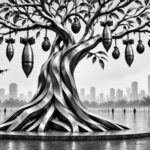
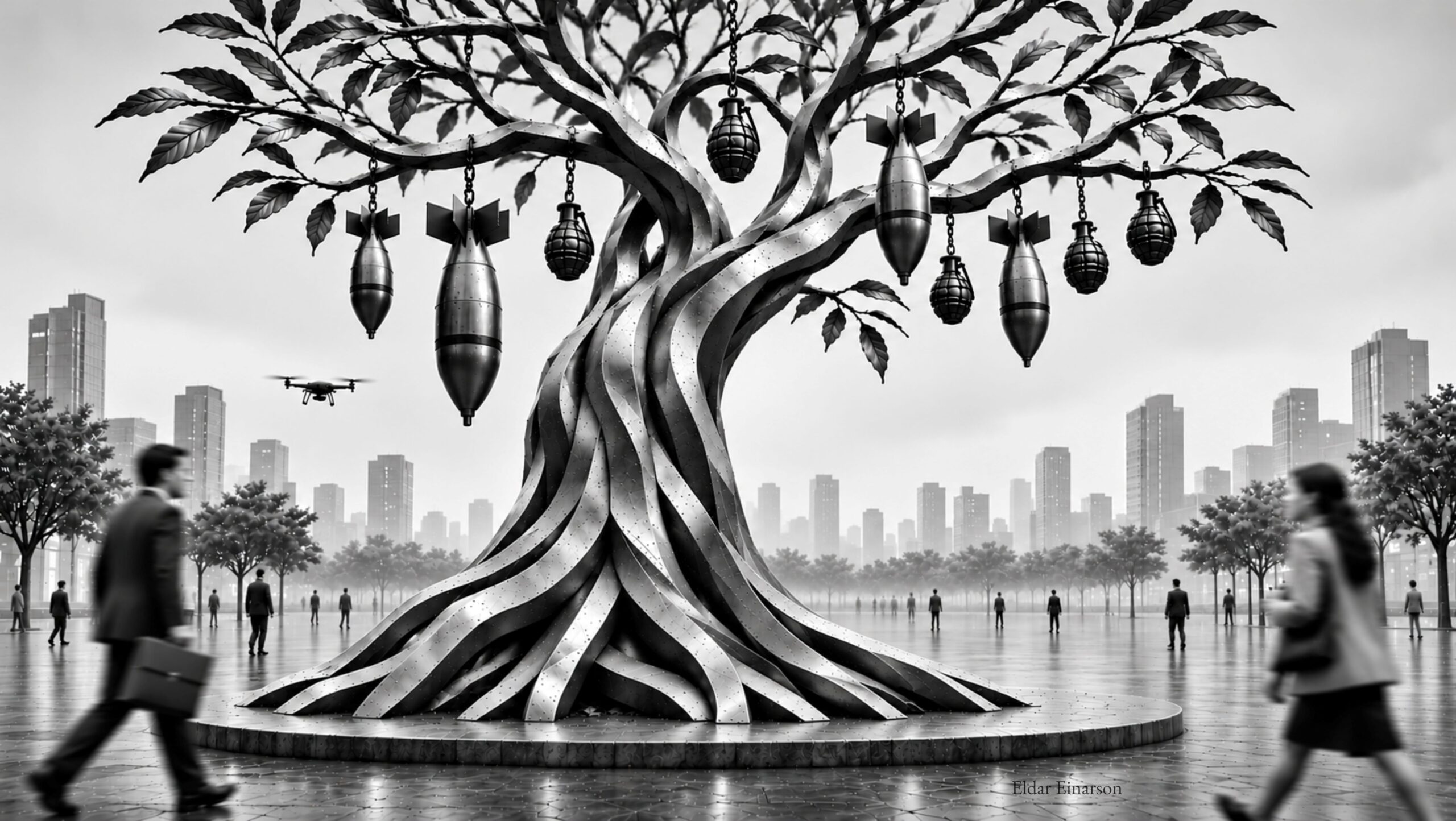
Featured image © Eldar Einarson. Created and artistically directed using AI.