
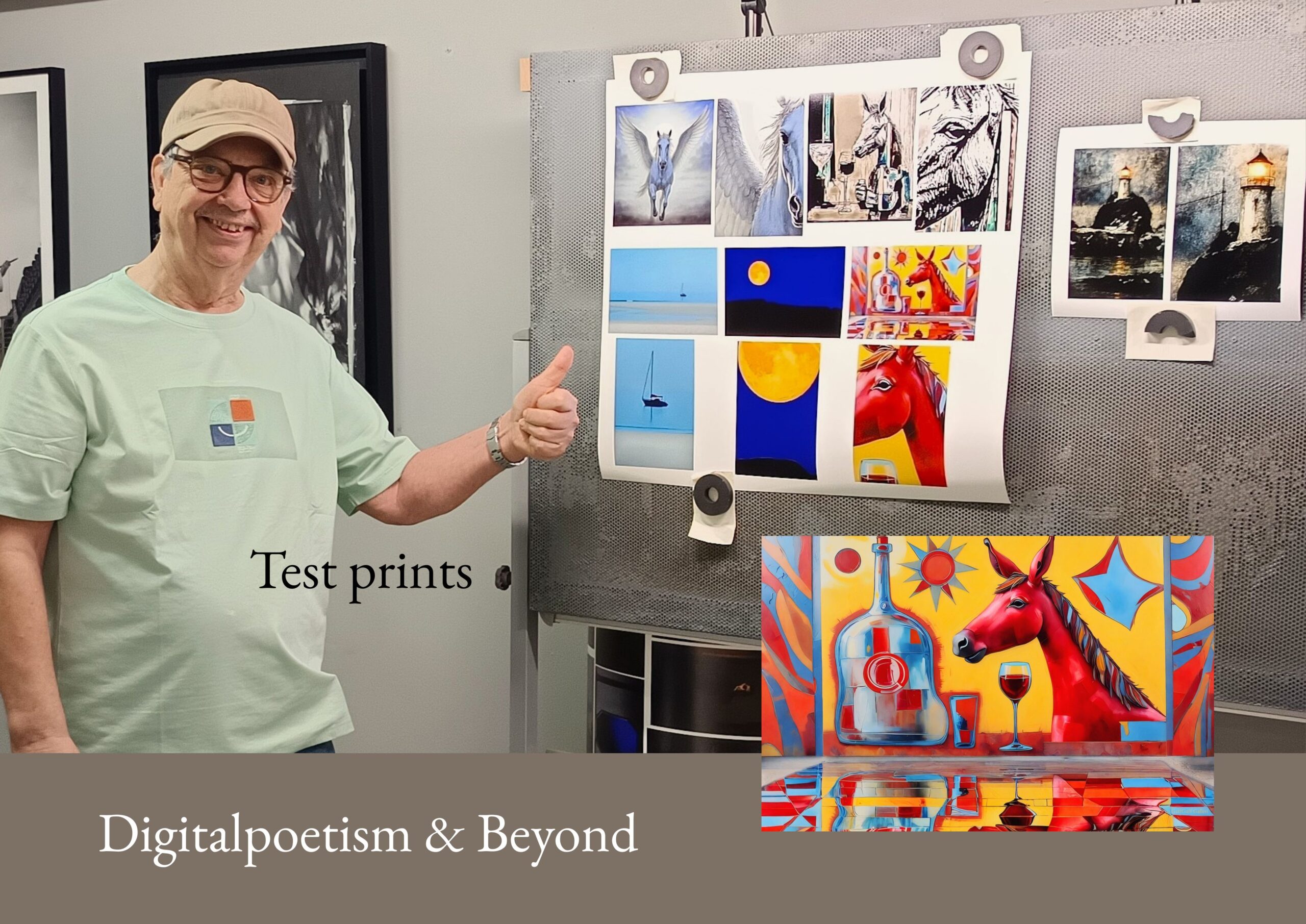
As the person responsible for running GaffGaff Galleri online, I feel it’s time to explain more fully what Digitalpoetism & Beyond actually is.
I will try to answer that as best I can. Not as an art historian (I am definitely not one), but as someone who has begun to take a greater interest in art history and is trying to understand both where art comes from and where it might be heading.
Digitalpoetism is a term coined by my husband, filmmaker and author Eldar Einarson, by combining two words: digital and poetism. He could not find an existing term that adequately described the expression he was aiming for, so he created one. He then added Beyond to open it up even further.
He is now 79 years old and has more than sixty years of experience working with images, stories, and human emotions.
Now, late in life, modern digital tools and artificial intelligence have given him an entirely new opportunity to use that experience.
And the term he felt best described the images he was creating became Digitalpoetism & Beyond.
But What Is It?
The simplest answer is that Digitalpoetism belongs under the broad umbrella of digital art.
Digital art is not one particular technique. Artists can work digitally with photography, drawing, 3D tools, image editing, algorithms, generative systems, and artificial intelligence.
Eldar uses several of the possibilities available in this digital toolbox, and AI is an important part of the process.
He is not trying to hide that. Quite the opposite.
Some people have said that you can clearly see that many of the images are AI-generated. For Eldar, that is exactly as it should be. It signals what he is exploring, while also acknowledging that AI can contribute to creating something that moves us. AI is part of the process, and when used with artistic intent, its distinctive qualities can create images that are as captivating in their own way as an oil painting or a photograph.
Artists have always worked with tools. An oil painter needs paint, brushes, and a surface. A photographer needs a camera. A digital artist works with computers, smartphones, and the software available. For me, the most interesting question is not simply which tool was used, but who made the artistic decisions.
That does not mean painting an oil painting is the same as creating a digital image with the help of AI. They are two entirely different processes requiring different skills. A painter may spend many years mastering the brush, colour, and materials.
Eldar’s starting point is different. His “craft” comes primarily from more than sixty years of filmmaking and storytelling. He has spent an entire professional life choosing images, composing them, telling stories, rejecting what does not work, and searching for the one expression that communicates what he is trying to say. That is the experience he now brings to the digital process.
Perhaps this is the hardest thing to see when you encounter only the finished image. An image may begin as an idea, a small story, or almost like a script. Then the work begins.
Through dialogue with AI, experimentation, new versions, and changes to composition, people, landscapes, light, colours, and details, the image gradually develops. Some attempts are discarded. Others lead to something new. The process continues until Eldar feels that the image expresses what he intended.
AI can generate material, but someone still has to keep making choices:
This works. This doesn’t. Move this. Remove that. Try again.
Now the image is beginning to tell the story.
And finally: There it is.
It is this combination of human experience and new digital possibilities that Eldar is trying to explore. Eldar himself has said that he is exploring the landscape between kitsch and fine art. I actually like that description.
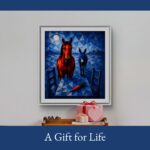
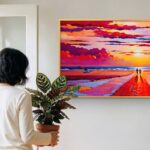
Digitalpoetism does not necessarily try to fit neatly into an existing art-historical category. Some images are simple yet precise and beautiful compositions, while others are more melancholic. But often, colour and a sense of joy are at the heart of his work, as in his wonderfully imaginative series Horses, Mules, Donkeys and Wine.
What they share is the desire to make the viewer stop for a moment.
That is also the thinking behind the description we use at GaffGaff Galleri:
A Modern Visual Expression
Norwegian film director and author Eldar Einarson creates original artworks where more than sixty years of visual experience meet modern digital tools. He explores the landscape between kitsch and fine art, developing a visual language that is both contemporary and deeply personal.
He calls this expression Digitalpoetism — a visual form in which technology is used to enhance human experiences and emotions freshly and imaginatively.
All works are original compositions developed through artistic refinement, experimentation, and visual direction. They are not copies or automated outputs, but unique works, often developed using AI as part of the creative process. This combination creates a distinctive visual expression designed to inspire, surprise, and connect.
Eldar is 79 years old. For me, this is also an interesting part of the story. An old filmmaker has been given a new opportunity. Suddenly, the experience accumulated over his long life of working with images and stories could be used in a different way because new tools had become readily available.
Digitalpoetism is Eldar’s attempt to use modern digital technology, including AI, as a new artistic tool for the experience he has accumulated over a lifetime of images and storytelling.
It belongs within digital art. And it is not an attempt to hide the fact that artificial intelligence has been involved. It is an attempt to discover what can emerge when human experience, imagination, and emotion meet tools that barely existed a few years ago. Whether the result is kitsch, art, or something somewhere in between is for others to decide.
I have only just begun learning about art history. And perhaps that is exactly what makes it so interesting: every generation gets new tools, but the question remains the same. Can we use them to create something that makes another person stop, look, and feel something?
Discover his work here.
One response to “What Exactly Is Digitalpoetism & Beyond?”
[…] want the work to carry a visible imprint of the time in which it was created. AI is part of that process – not as the idea behind the work, but as a contemporary tool through which I develop and explore […]