After following my husband Eldar’s exhibition in Norway from afar, I finally had the opportunity to experience the opening of an art exhibition up close here in Davao City, Philippines. My hometown has a fast-growing art scene with talented artists and some good galleries, and I felt it was time to explore it more.
What better way to begin my art exploration journey in the city than by visiting an exhibition by Tanya Lee, a distinctive and gifted painter whose work I have long admired.
I brought Eldar with me and went to the opening of her new exhibition, A Boundless Belonging, at Galerie Raphael in Azuela Cove.
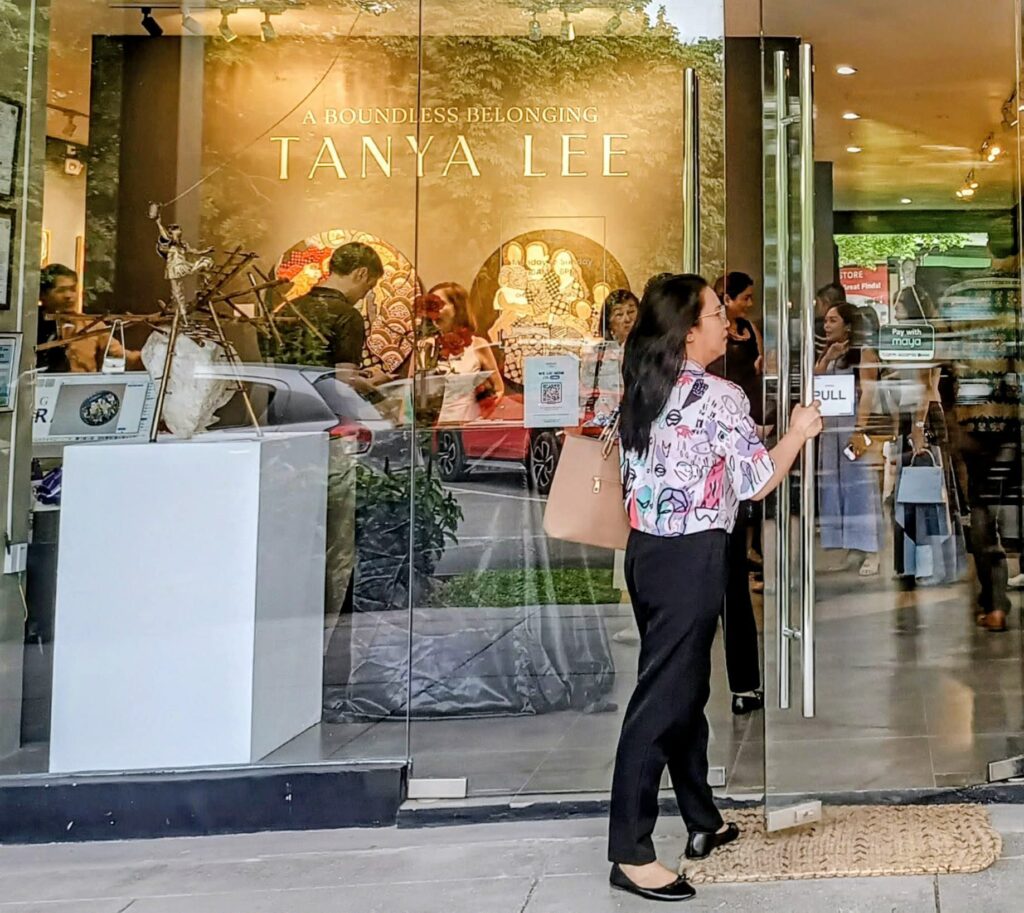
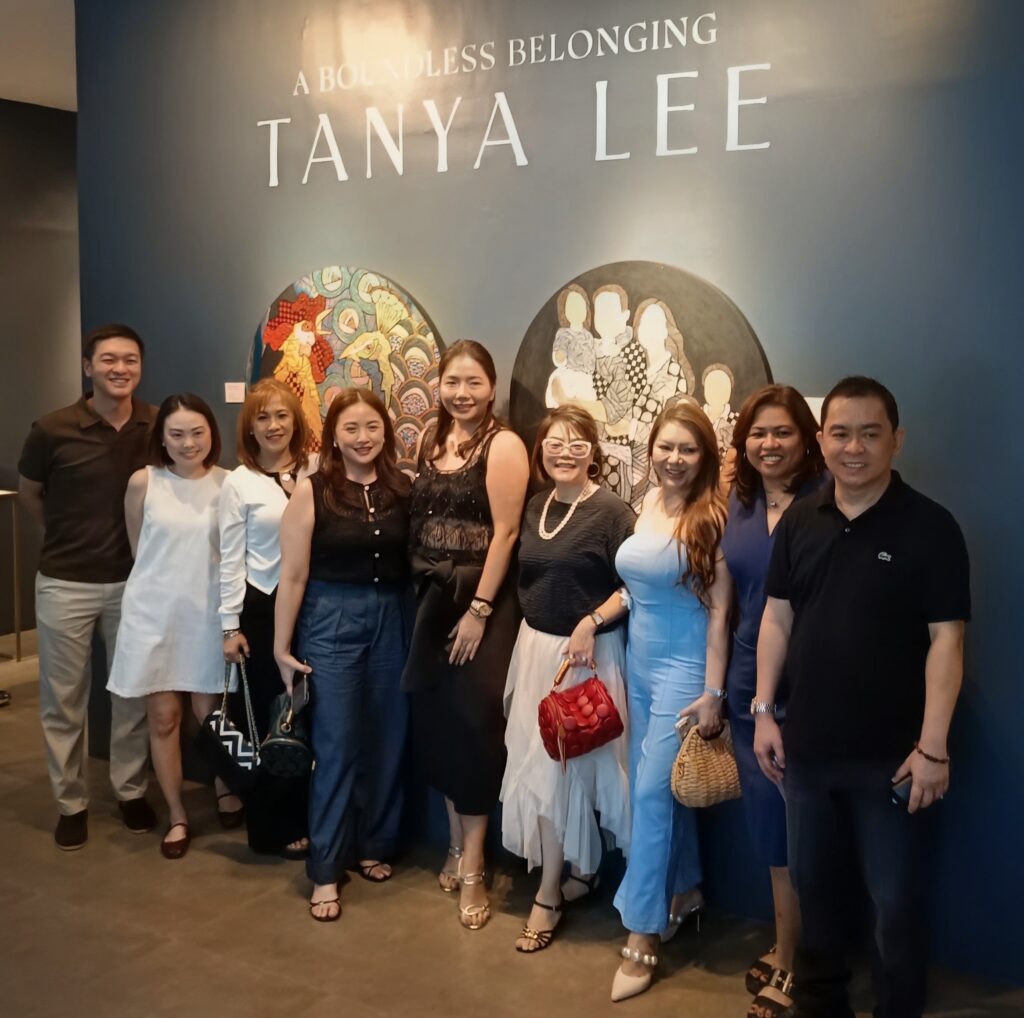
When we arrived about thirty minutes after the opening, the gallery was already packed with visitors. The atmosphere was warm and relaxed, and we focused on the art at once.
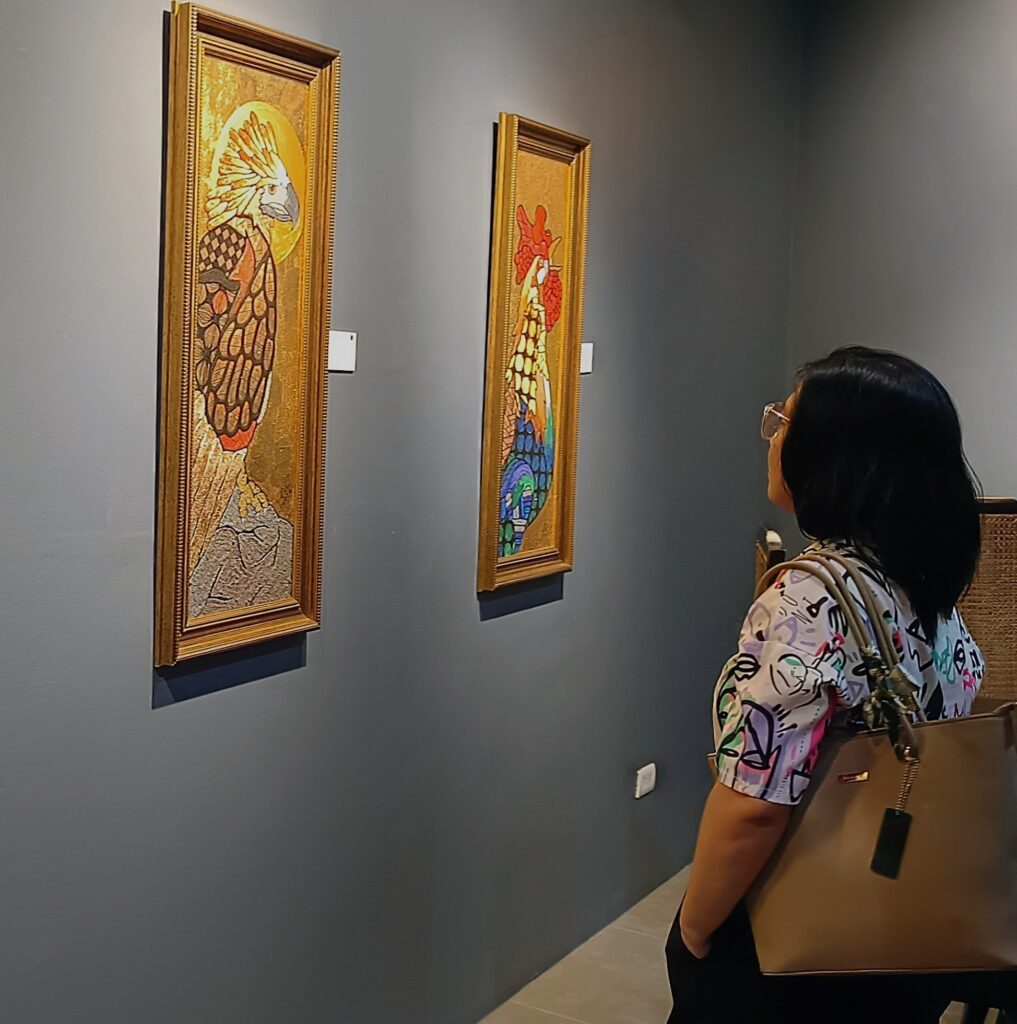
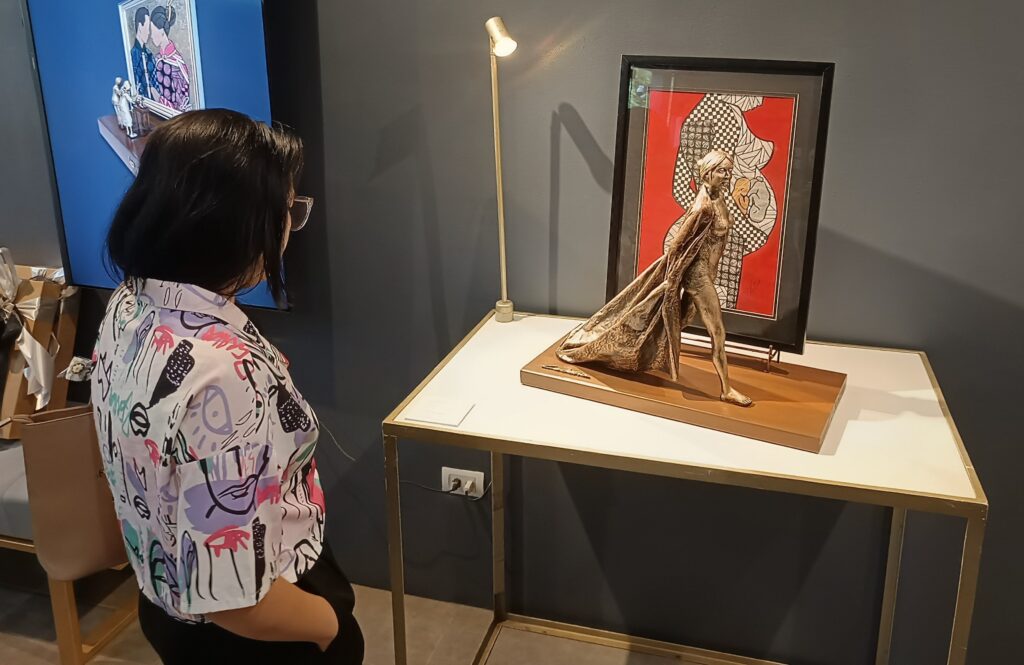
I was immediately fascinated. The exhibition felt like stepping into a personal mythology told through an original visual language. What intrigued me most was the way Tanya Lee creates her own universe, where birds and people seem to mirror one another.
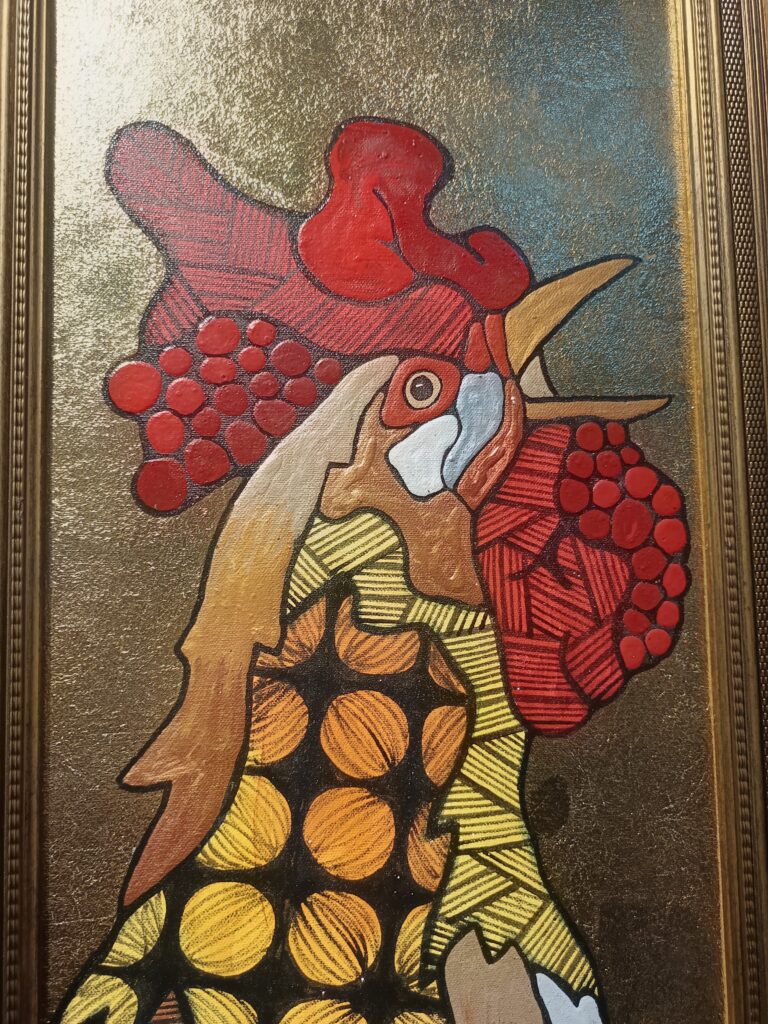
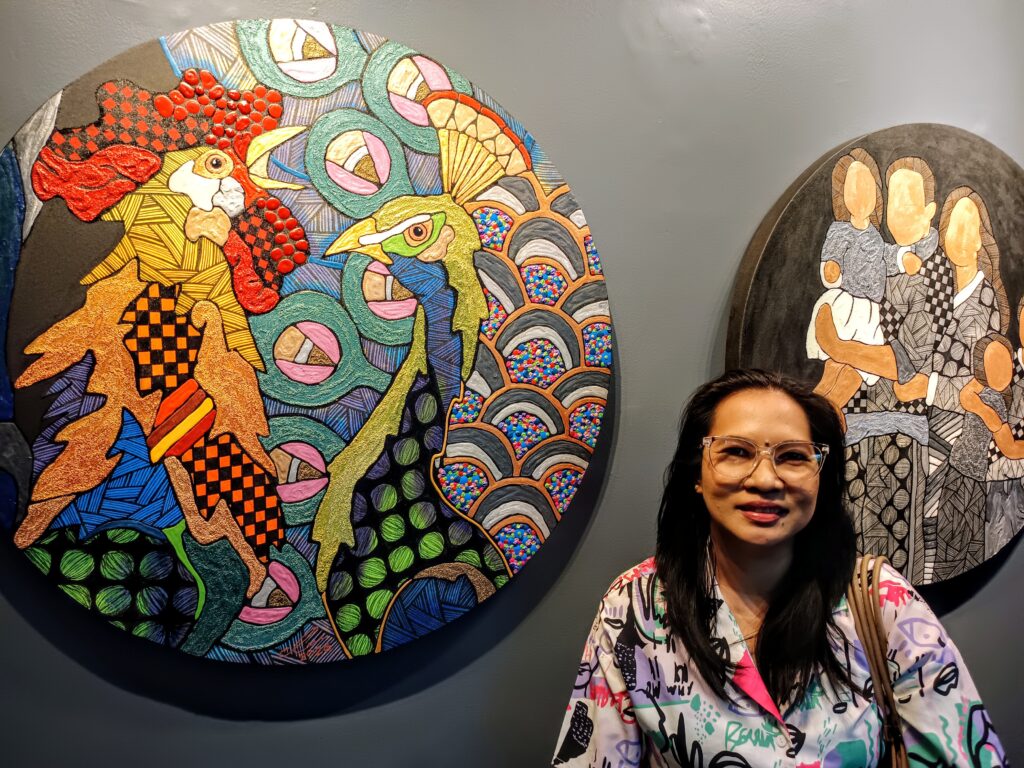
The birds possess distinct personalities. Every rooster and parrot has its own character, posture, and almost its own voice. They are richly detailed, filled with ornament, texture, and vibrant colour.
The human figures, however, are faceless.
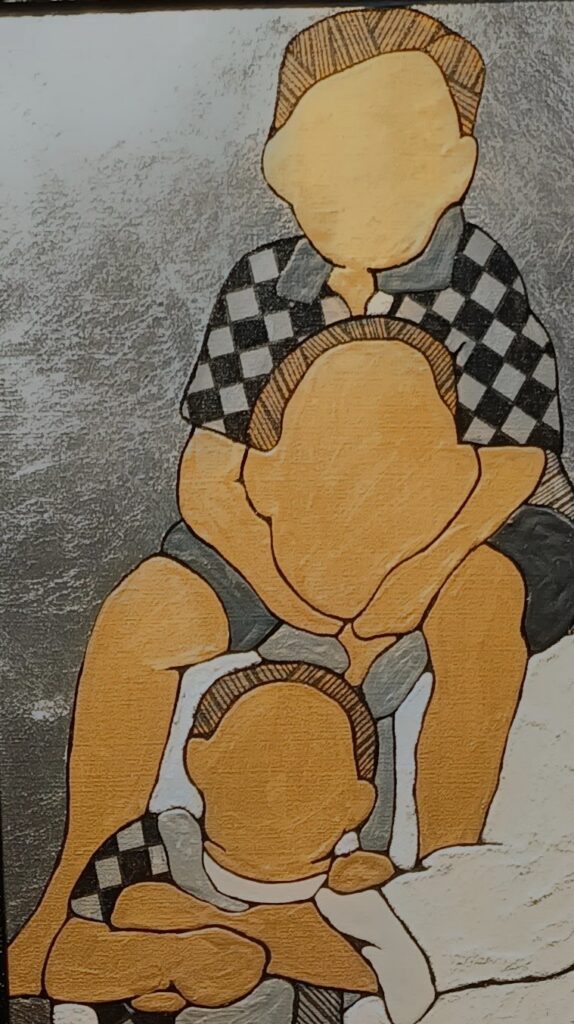
Rather than portraying specific individuals, they seem to represent relationships: mother and child, family, belonging, and community.
As Eldar observed while we discussed the exhibition afterwards, removing the faces softens personal identity and transforms the figures into universal symbols.
This creates an interesting reversal: the animals become individuals, the people become symbols.
It is also interesting to compare Tanya Lee’s work with Eldar’s own artistic language. His works often invite viewers into open poetic narratives where multiple interpretations are possible. Tanya Lee’s paintings, by contrast, present a more self-contained symbolic universe governed by its own visual language. Both are narrative artists, yet they tell their stories in remarkably different ways.
I am certainly not an art expert, so I asked Eldar to share his own impressions.
Eldar’s Reflections
Galerie Raphael itself, with its dark grey walls and almost labyrinth-like layout, provides an excellent setting for Tanya Lee’s paintings.
One of the exhibition’s most interesting ideas is the inclusion of works by other artists. Small sculptures of Jong Tangiday, Brando Cedeño and Leo Villos have been carefully positioned in front of several of the icon-inspired paintings.
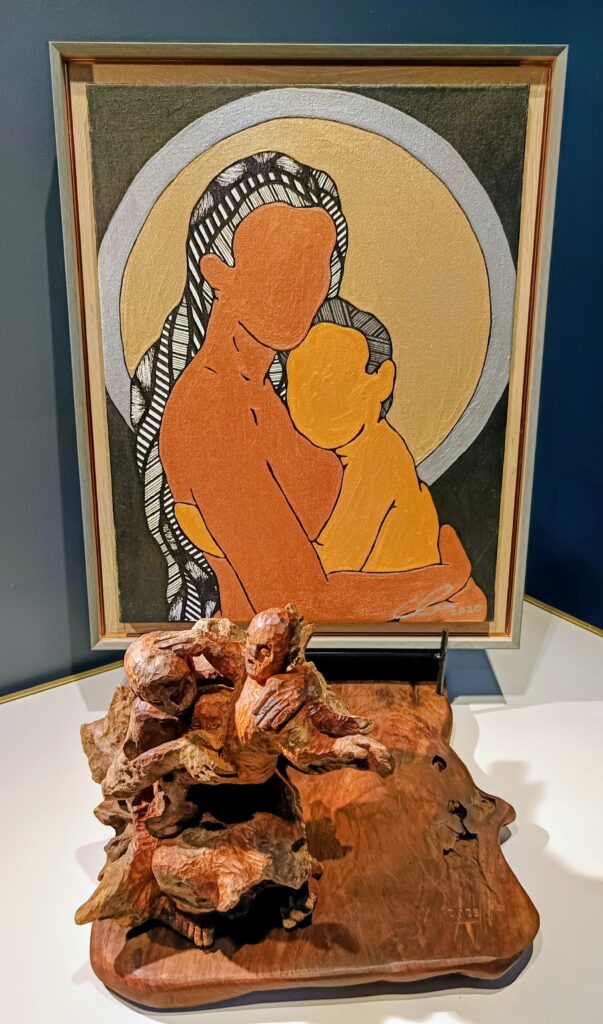
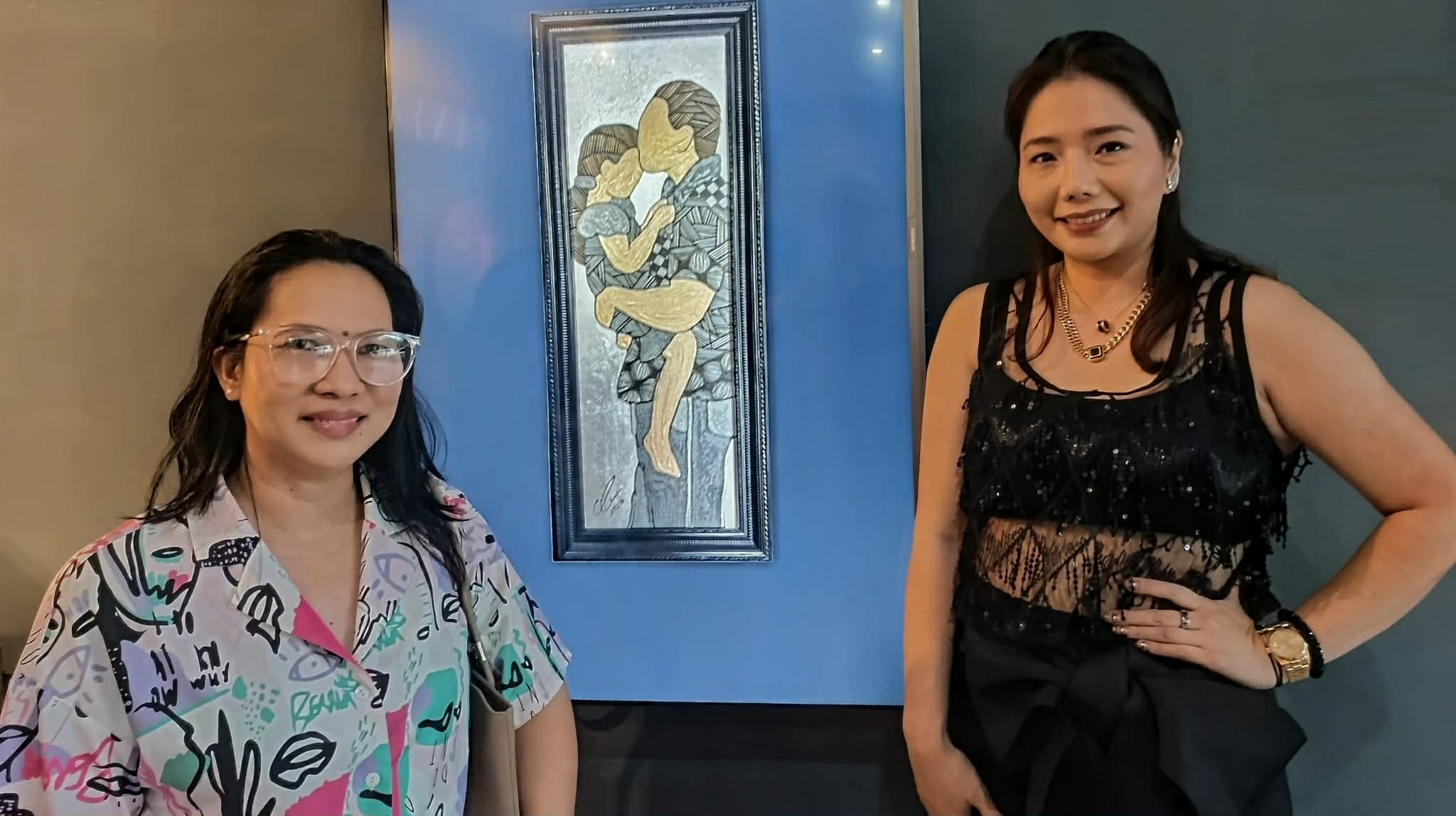
These are not simply paintings with sculptures placed in front of them. They create a dialogue between two artists.
The painting is highly simplified: a mother embracing her child, both without facial features. Their anonymity makes them universal; they could represent any mother and any child. The golden halo behind them inevitably recalls religious icons, especially the Madonna and Child.
The sculpture tells a completely different story. It is rough, organic, and full of movement. It appears to emerge naturally from the wood itself, as though humanity remains deeply rooted in nature. It introduces themes of struggle, vulnerability, and mortality.
Together, something remarkable happens. The painting represents the timeless and the idealised. The sculpture represents the earthly and the physical. Viewed together, they begin to comment on one another. The result becomes an expanded installation where neither work can be fully understood in isolation. Together they create a third work that exists only through their encounter.
I find this collaboration particularly successful because the two artistic languages are so different. It reminds me of how some museums place contemporary sculpture in front of historical paintings, yet here the dialogue feels much more intentional.
It is a demanding artistic strategy that only succeeds when both artists accept that their works will no longer be experienced as entirely separate. Here, the sculpture does not compete with the painting; it adds another layer of meaning.
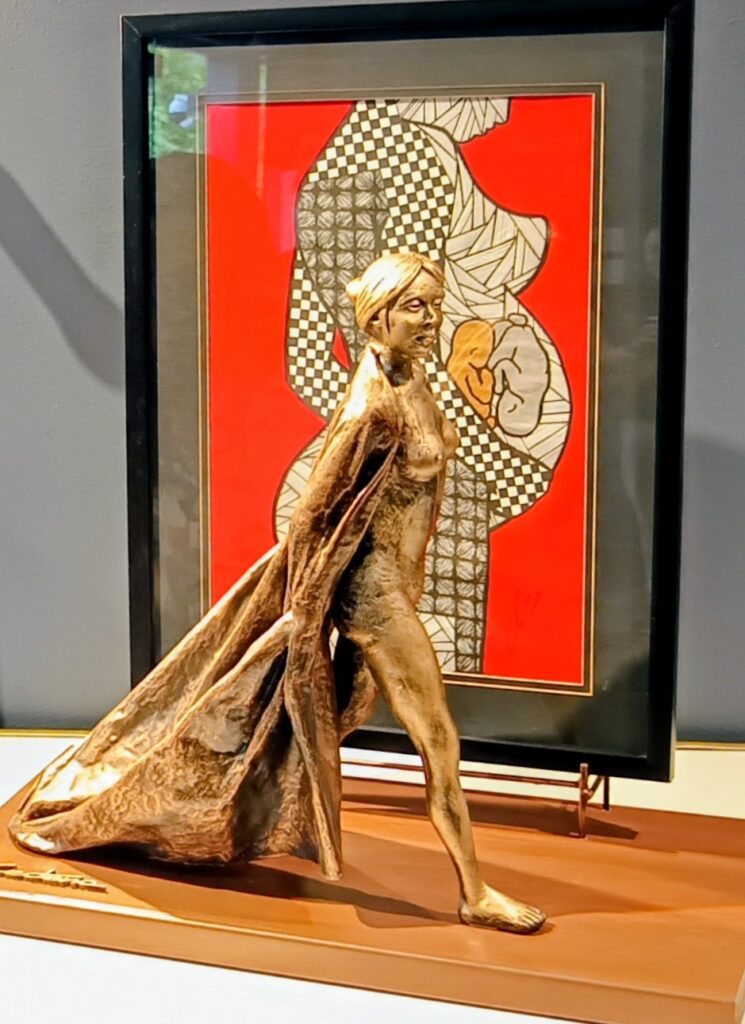
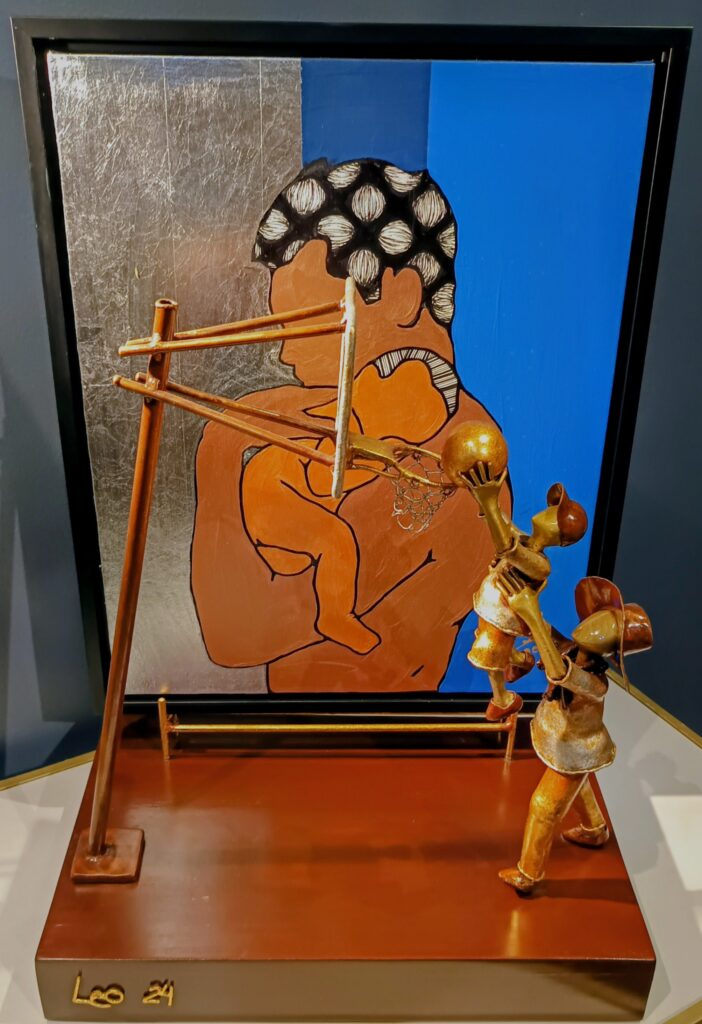
Another aspect that caught my attention is Tanya Lee’s different treatment of animals and people. The birds are rendered with remarkable individuality, while the human figures remain anonymous.
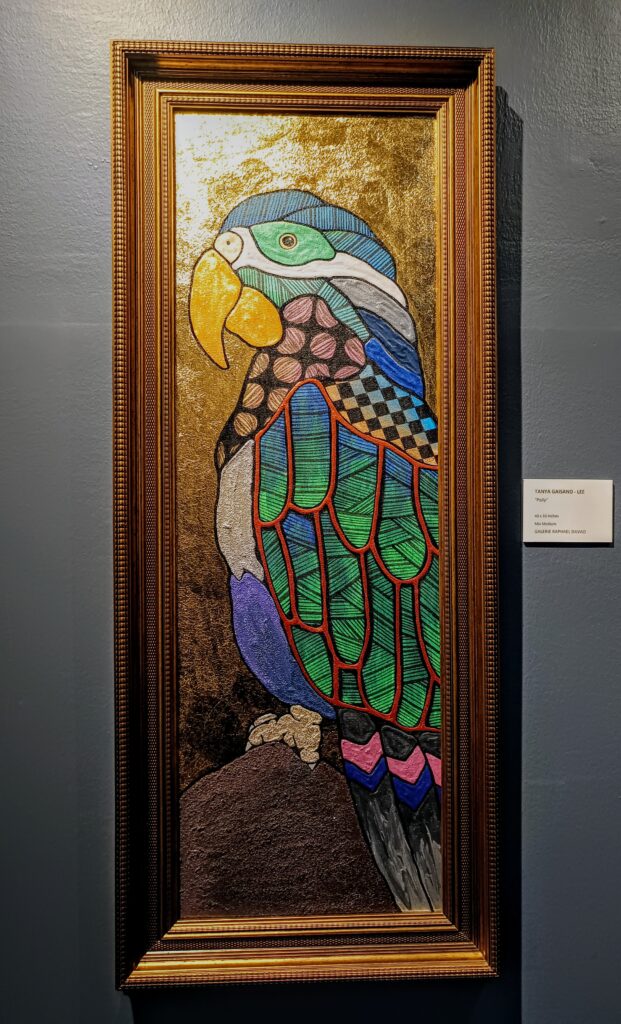
This is almost the reverse of what we normally encounter throughout art history. Traditionally, people are portrayed as individuals, while animals often serve as decorative or symbolic elements. Here, the opposite happens.
It suggests that Tanya Lee may be less interested in individual identity than in human roles. The family becomes a universal image of love, care, and belonging, while the birds carry emotion, temperament, and personality. Another possible interpretation is that the missing faces invite viewers to project themselves into the paintings. Without fixed identities, any family can become this family.
There is also a striking contrast between the two groups of works. The bird paintings are expressive, rhythmic, and decorative. The family paintings are quiet, contemplative, and almost icon-like. Together, they seem to represent two sides of the same world: the rich diversity of outer life and the intimate bonds of our shared humanity.
One of the exhibition’s strengths is that it encourages viewers to ask a simple but profound question:
Why do the birds have faces while the people do not?
Whenever an artistic decision causes us to pause and reflect on something so fundamental, it possesses a quiet but genuine power.
Those are my husband’s reflections.
As for me, I can say that I left the gallery inspired. Our conversation over a good Mexican dinner afterwards opened new ways of looking at Tanya Lee’s work. I had entered the gallery expecting to admire and enjoy an exhibition. I left seeing her paintings in a richer and more meaningful way. That, to me, is the mark of a memorable exhibition.
Featured image and photos © Eldar Einarson